
If you’ve ever bought a bottle of “lemon oil” for your guitar fingerboard, there’s a good chance you’ve been misled — not by a rogue seller, but by an industry-wide naming convention that’s been confusing guitarists for decades.
What’s Actually in Most “Lemon Oils”?
Turn over almost any bottle of guitar lemon oil and read the ingredients. What you’ll find — if the manufacturer lists them at all — is white mineral oil. Sometimes called liquid paraffin, sometimes listed as “petroleum distillate,” white mineral oil is a by-product of petroleum refining.
It has nothing to do with lemons.
The lemon scent is added fragrance. The yellow colour, where present, is a dye. The “lemon oil” name is a marketing convention that dates back decades and has stuck — despite being almost entirely misleading.
This includes some of the most well-known brands on the market. If the bottle doesn’t explicitly state it’s cold-pressed or plant-derived, assume it’s mineral oil.
Why Does It Matter?
Mineral oil isn’t harmful to your guitar in small quantities — it won’t dissolve your finish or harm the fingerboard overnight. But it also doesn’t do what a genuine plant-based oil does:
- No vitamins — mineral oil contains no Vitamin E, no fatty acids, no natural UV protection
- No nourishment — it coats the wood surface rather than penetrating and conditioning the timber
- No stain removal — plant-based oils naturally high in oxalic acid actively remove water and metal staining; mineral oil does not
- No biodegradability — petroleum-derived products don’t break down naturally
For a product you’re applying to a beloved instrument — potentially a vintage guitar worth thousands — the difference matters.
What a Genuine Fingerboard Oil Actually Does
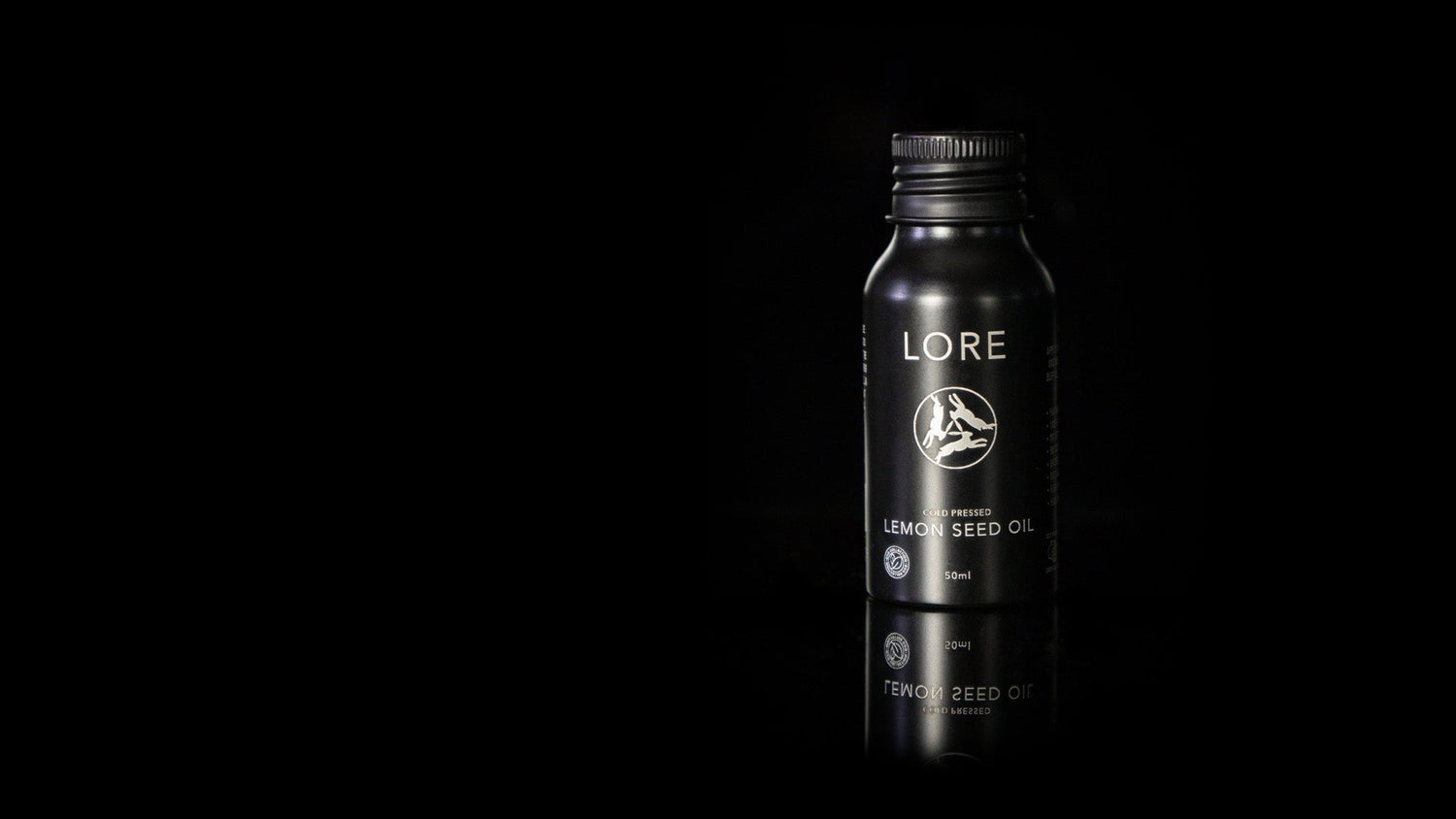
A cold-pressed, plant-based fingerboard oil works fundamentally differently to mineral oil. LORE® Cold Pressed Lemon Seed Fingerboard Oil is formulated from organic cold-pressed oils with zero petroleum content. Here’s what that means in practice:
- Vitamin E — forms a natural barrier against UV discolouration, protecting the wood from sun damage over time
- Oxalic acid — naturally present in the oil, actively removes water staining and metal staining from fret contact
- Fatty acids (linoleic, palmitic, oleic) — penetrate the timber and help regulate moisture, reducing the risk of fret pop caused by over-humidification
- Fully biodegradable — no petroleum, no solvents, nothing that doesn’t belong in a workshop or on an instrument
How to Tell the Difference
When buying fingerboard oil, look for:
- “Cold-pressed” on the label — this indicates a genuine plant extraction process
- Specific oil names — lemon seed oil, jojoba oil, almond oil, etc.
- “Petroleum-free” or “mineral oil-free” stated explicitly
- Ingredient lists — reputable natural products will list their ingredients; petroleum-based products often won’t
If the bottle just says “lemon oil” with no further detail, treat it as mineral oil until proven otherwise.
The Bottom Line
Most guitar lemon oils are petroleum products with lemon fragrance. They’ll do a basic job of preventing your fingerboard from drying out, but they offer none of the active benefits of a genuine cold-pressed oil. For players who care about their instruments — and the environment — it’s worth knowing what you’re actually applying.
LORE® Cold Pressed Lemon Seed Fingerboard Oil is available in 50ml retail and 250ml trade sizes. Petroleum-free, organic, handmade on Dartmoor.
🎸 Not sure which LORE® product is right for your finish or instrument area? View our Product Guide →