
Why Fingerboard Care Matters
Your guitar's fingerboard is one of the most played surfaces on the instrument — and one of the most neglected. Over time, sweat, skin oils, and grime build up between the frets, drying out the wood and affecting both tone and playability. A well-maintained fingerboard feels smoother under your fingers, stays in tune more reliably, and can last the lifetime of the instrument.
At LORE, we've spent over 8 years developing fingerboard care products that work with the wood rather than against it — using cold-pressed natural oils instead of the mineral oils found in most commercial products. Here's everything you need to know about cleaning and oiling your fingerboard properly.
How Often Should You Oil Your Fingerboard?
As a general rule:
- Every string change — a light clean and condition each time you restring
- Every 3–6 months — a deeper clean if you play regularly
- More frequently in winter — central heating dries the air significantly, which dries out unfinished wood faster
Maple fingerboards with a gloss finish do not need oiling. To keep a finished board feeling smooth you can try our LORE Instrument Polish.
Applying the polish directly to a finished board lifts grime and creates a smooth playing feel for a long period. Perfect for any high gloss finished fingerboards!
What You'll Need
- A soft, lint-free cloth
- A fret cleaning tool or fine steel wool (0000 grade) for tarnished frets
- A quality fingerboard oil — ideally cold-pressed and natural (more on this below)
- Painter's tape to protect the body if needed
Step-by-Step: How to Clean Your Fingerboard
Step 1 — Remove the Strings
You don't have to remove all strings at once, but having them off gives you full access to the board. If you're doing a full restring, this is the perfect time to clean the fingerboard.
Step 2 — Remove Grime from the Frets
Use a dry cloth to wipe down the board first. For stubborn grime built up around the frets, a fret cleaning tool or a small amount of 0000 steel wool works well — always rub along the fret, not across the grain of the wood. Tape off the wood if you're using steel wool to avoid scratching it.
Step 3 — Apply Fingerboard Oil
Apply a small amount of fingerboard oil to a cloth — not directly to the wood. Less is more. Work it into the wood in small circular motions, covering the full length of the board. Pay attention to the areas around the frets where the wood tends to dry out most.
With LORE Fingerboard Oil, a few drops per section of the board is all you need. The cold-pressed formula absorbs quickly without leaving a greasy residue.
Step 4 — Let It Absorb
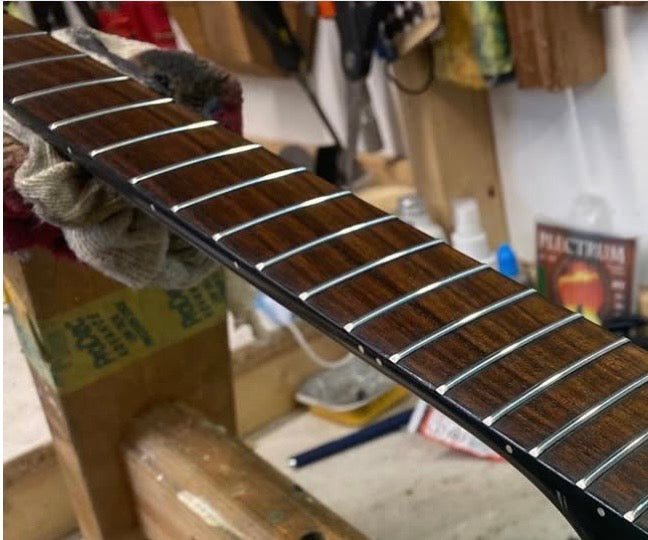
Leave the oil to absorb for 5–10 minutes. You'll often see the wood visibly darken and come back to life as it drinks in the moisture.
Step 5 — Buff Off the Excess
Use a clean, dry cloth to buff off any excess oil. The fingerboard should feel smooth and slightly nourished — not oily or sticky. If it feels greasy, you've used too much; buff more firmly.
Step 6 — Restring and Play
Restring your guitar and enjoy the improved feel. A freshly conditioned fingerboard often makes the guitar feel like new.
Choosing the Right Fingerboard Oil
Not all fingerboard oils are equal. Most products on the market use mineral oil — a petroleum by-product that sits on the surface of the wood rather than being absorbed. While it can make a fingerboard look shiny in the short term, it doesn't truly nourish the wood.
LORE Fingerboard Oil uses cold-pressed natural oils that penetrate the wood grain, conditioning it from within. It's also free from synthetic additives and is produced sustainably on Dartmoor — part of our commitment to eco-friendly guitar care.
"The difference between a mineral oil and a cold-pressed natural oil isn't just philosophical — it's practical. Natural oils are absorbed by the wood. Mineral oils largely aren't." — Ryan Havinga, LORE founder
Common Mistakes to Avoid
- Using too much oil — over-oiling can cause the wood to swell and affect fret seating. A little goes a long way.
- Using lemon oil — many 'lemon oils' are actually mineral oil with fragrance added. Check the ingredients.
- Oiling a maple fingerboard with a gloss finish — finished maple doesn't need oiling; the finish seals the wood. Oil the fretboard only if it's unfinished.
- Skipping the clean — oiling over grime just seals the dirt in. Always clean before you condition.
Fingerboard Care for Different Wood Types
Rosewood — the most common unfinished fingerboard wood. Drinks up oil readily and benefits from regular conditioning, especially in dry conditions.
Ebony — denser than rosewood and needs less oil, but still benefits from occasional conditioning. Often found on higher-end instruments.
Maple (unfinished) — less common but does need conditioning. Unfinished maple is often found on vintage-style instruments.
Maple (finished/gloss) — does not need oiling. Clean with a damp cloth only.
Final Thoughts
Fingerboard care is one of the simplest and most impactful things you can do for your guitar. A clean, well-conditioned board improves playability, protects the wood, and keeps your instrument looking and sounding its best for years to come.
If you're looking for a natural, sustainable fingerboard oil made in the UK, explore the LORE range — developed over 8 years and trusted by guitarists and luthiers alike.
🎸 Not sure which LORE® product is right for your finish or instrument area? View our Product Guide →