
It's one of the most common guitar care questions on forums and YouTube comments: "Can I just use olive oil on my fingerboard?" It seems logical — olive oil is natural, it's a food-grade product, and it's in every kitchen. But the answer is no, and the reasons are worth understanding.
Why Olive Oil Seems Like a Good Idea
Olive oil is a natural, plant-based oil. It's used to condition wooden kitchen utensils, cutting boards, and salad bowls. If it's good enough for a wooden chopping board, why not a guitar fingerboard?
The analogy breaks down when you look at the differences between a chopping board and a guitar fingerboard — and at the properties of olive oil itself.
The Problem with Olive Oil on Guitar Fingerboards
It goes rancid. This is the critical issue. Olive oil is a drying oil — but a slow and incomplete one. Over time, it oxidises and goes rancid. On a guitar fingerboard, this means a sticky, unpleasant smell and a tacky surface that attracts dirt. The rancidity process is irreversible; once the oil has turned, you can't un-turn it.
It's too heavy. Olive oil is a relatively thick, heavy oil that doesn't absorb cleanly into wood. It tends to sit on the surface, creating a greasy film rather than conditioning the wood.
It can go mouldy. In humid conditions, rancid oil on a fingerboard can develop mould. This is rare but not unheard of, particularly in guitars stored in damp environments.
It's not formulated for the purpose. Guitar fingerboard oils are specifically formulated to absorb cleanly, condition without residue, and remain stable over time. Olive oil is formulated for cooking.
What About Other Kitchen Oils?
The same logic applies to most kitchen oils — coconut oil, vegetable oil, sunflower oil. All of them will eventually go rancid on a fingerboard. Some (like coconut oil) are solid at room temperature and create their own problems. None of them are appropriate substitutes for a purpose-made fingerboard oil.
Linseed oil is sometimes recommended as a DIY alternative and is more stable than olive oil — but raw linseed oil takes a very long time to dry and can remain tacky for days. Boiled linseed oil dries faster but contains metallic driers that aren't ideal for a surface you touch constantly.
What to Use Instead
A purpose-made fingerboard oil, formulated from stable plant-based ingredients, is the right tool for the job. Look for:
- No petroleum derivatives (mineral oil, paraffin)
- No synthetic fragrance or artificial lemon scent
- Stable, non-drying or slow-drying plant oils that won't go rancid
- A clean, non-greasy finish after application
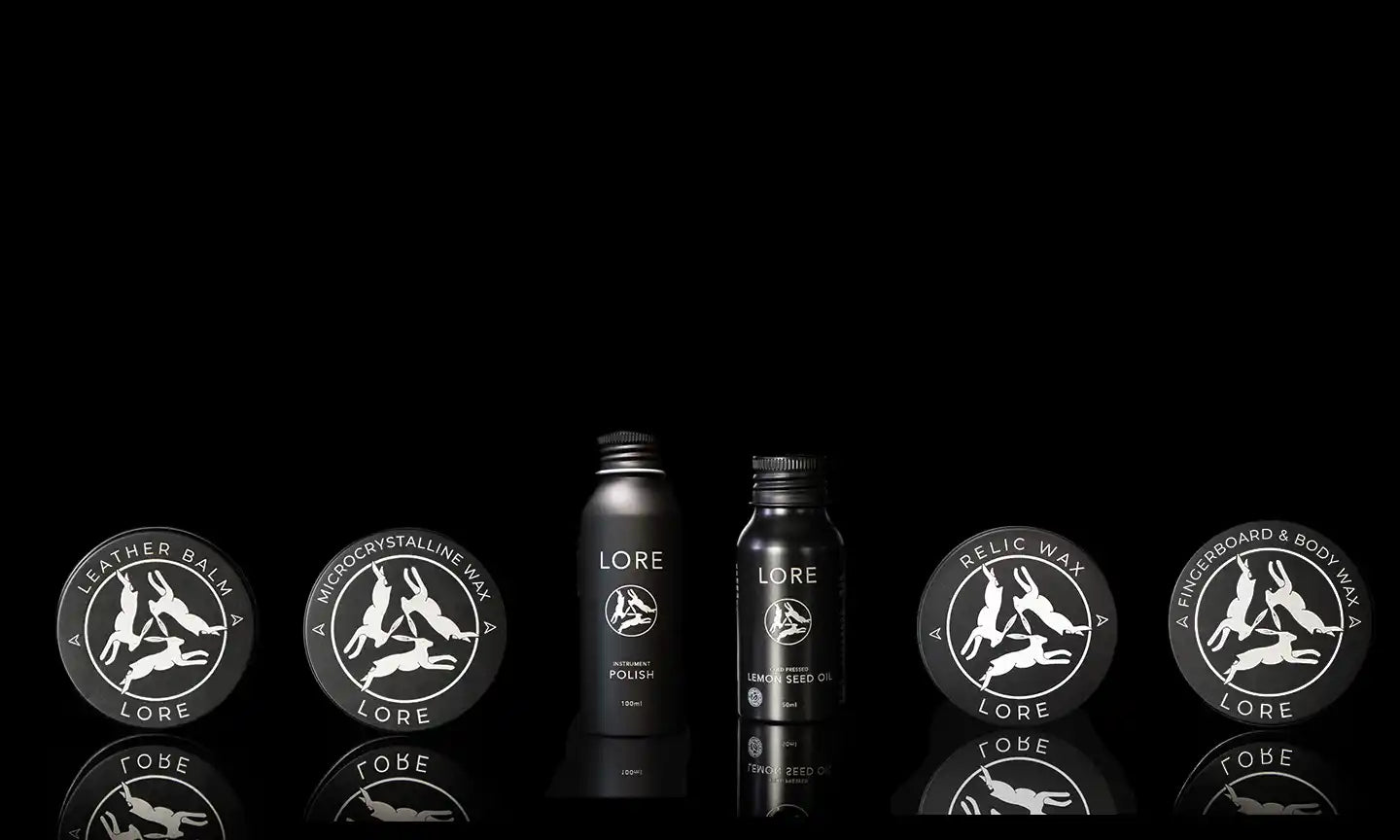
The LORE® Cold Pressed Lemon Seed Fingerboard Oil meets all of these criteria — a petroleum-free, cold-pressed oil formulated specifically for unfinished tonewoods. It absorbs cleanly, conditions without residue, and won't go rancid. The scent is natural, not synthetic, and it leaves no greasy film behind.
The difference in application and result between a quality fingerboard oil and olive oil is significant — and the long-term consequences of using the wrong product are real.
Olive oil on a guitar fingerboard is a bad idea — not because it's harmful immediately, but because it will go rancid over time, creating a sticky, smelly, difficult-to-clean mess. Use a purpose-made fingerboard oil. It costs very little, lasts a long time, and does the job properly.
Do it properly, once. Petroleum-free fingerboard care, crafted for players who care about their instruments.
Shop LORE® Fingerboard Oil →